UNI-SQUARE
“One of a Kind”
〜 “A Cute Soup Dumpling”: Proof That I Exist
~My Father’s Stamp Collection
~“Japanese Beauty” Fills This 400-Year-Old Tea Bowl
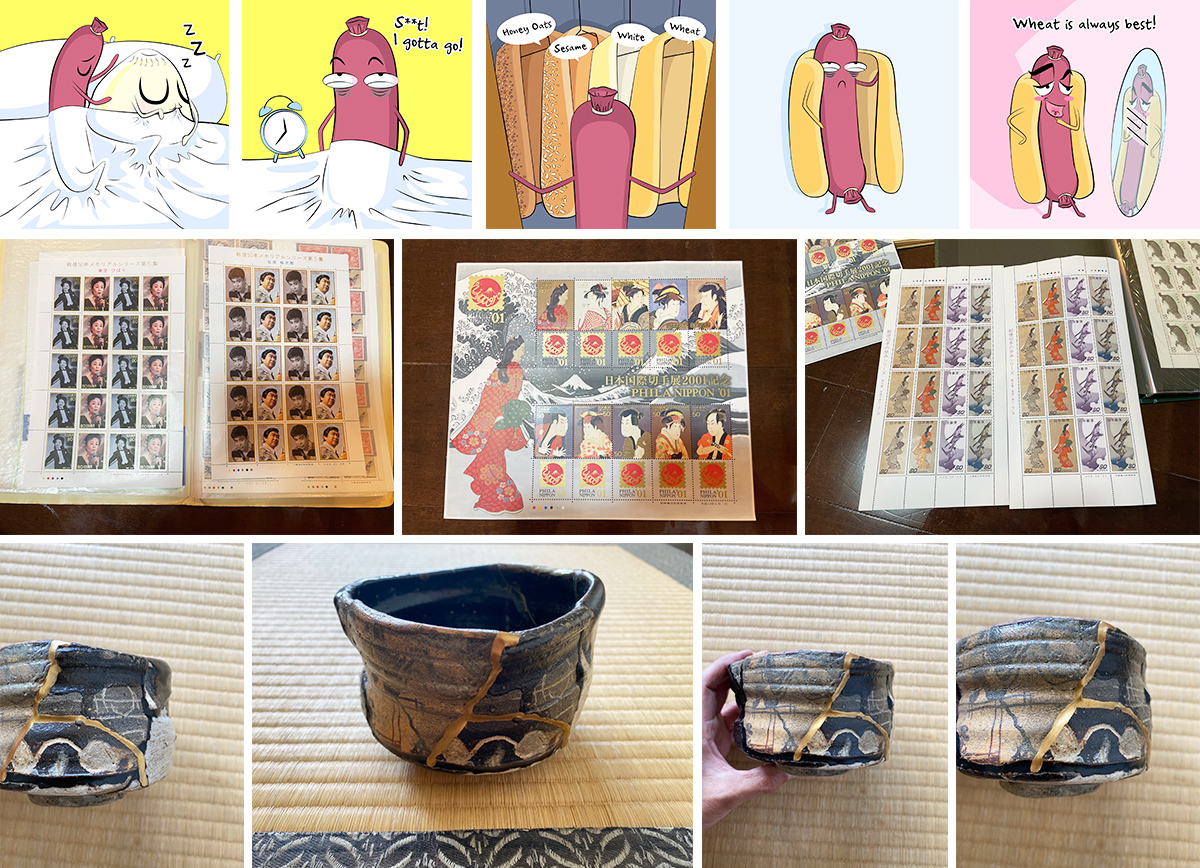
The UNIVA CAPITAL Group is active in 14 countries and territories worldwide. In this November issue of UNI-SIGHT, we introduce private things we don’t know about our NAKAMA. Doesn’t everyone have something precious in which they take pride? Isn’t there something about family or friends that you cherish? We can be sure that there are as many stories as there are NAKAMA! Here we introduce one of a kind, precious things cherished by three of them.
The three NAKAMA who cooperated with this project are Vicky (Shao Wei Jia) from UNIVA Fusion, UNIVA CAPITAL Holdings Limited Director Atsuhiko Sano, and UNIVA CAPITAL Group Chief Branding Officer Shosei Asakura.
Her “Happy Moments”: A Legacy for Those She Cherishes
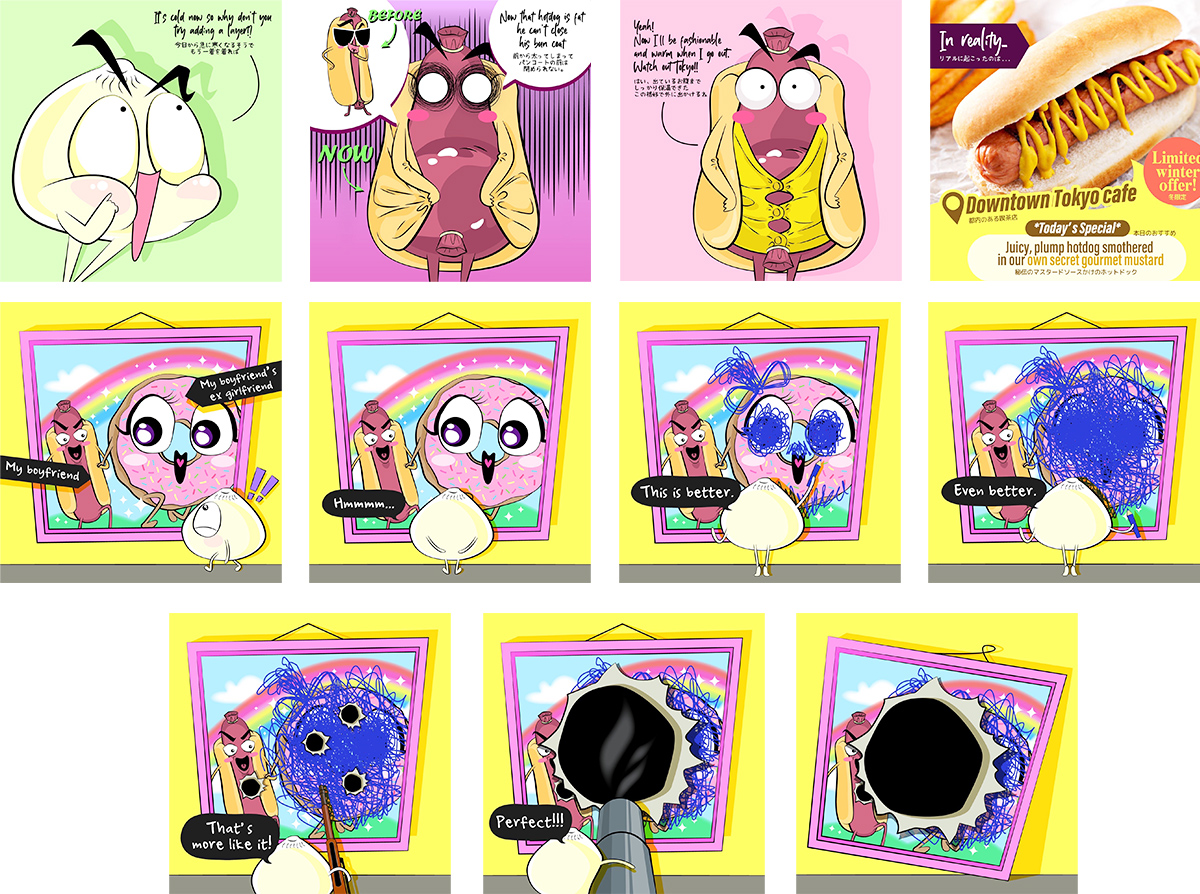
Vicky’s “One of a kind” is “A Cute Soup Dumpling,” which she posted on Instagram in March 2021. In this cartoon, Vicky, who is Chinese, nakedly reveals what she has encountered, her feelings and her thoughts while living in Japan. The cute soup dumpling character is Vicky herself. A sausage is an American boyfriend who can’t live without hot dogs. During the 17 months that Vicky has been posting on Instagram, this cartoon has attracted nearly 3200 followers. We asked Vicky why she started posting on Instagram.
“The COVID pandemic, the war, one unimaginable thing after another. Then, came a moment…what if I suddenly died? One face after another of people from whom I might suddenly be parted flashed through my mind. Then I imagined people who might pity me. But I was happy living in Japan. In my heart, events from my everyday life took shape as cartoons. When I died, I wanted to leave something behind to comfort family, friends, and others left behind. My “pitiable self” would disappear. That thought was the seed from which A Cute Soup Dumpling grew.”
I had never imagined that those scenes from everyday life in which Vicky, using her talent for drawing, depicted her unique cute soup dumpling, embodied such deep love and profound view of life and death. I only knew that when I saw A Cute Soup Dumpling, it warmed my heart and the content had me suddenly laughing. How did she come up with that content?
“Because I have a Yin temperament, my content always starts on a negative note (laughs). I borrow strength from drink, and when I am drunk, the situation turns positive and becomes a joke. That joke becomes the cartoon.”
For example, what she feels when he doesn’t want to get married isn’t stupid infatuation. When she focuses on their present happiness, the story turns positive. “In most cases, it is best to laugh and move on,” she says. Seeing Vicky in action, I suspect that she is not “a Yin character.” Even if the real world is full of things for which it is hard to find words, she finds a way to express them in A Cute Soup Dumpling. A Cute Soup Dumpling is posted in both English and Japanese. All of our NAKAMA should follow this Instagram.
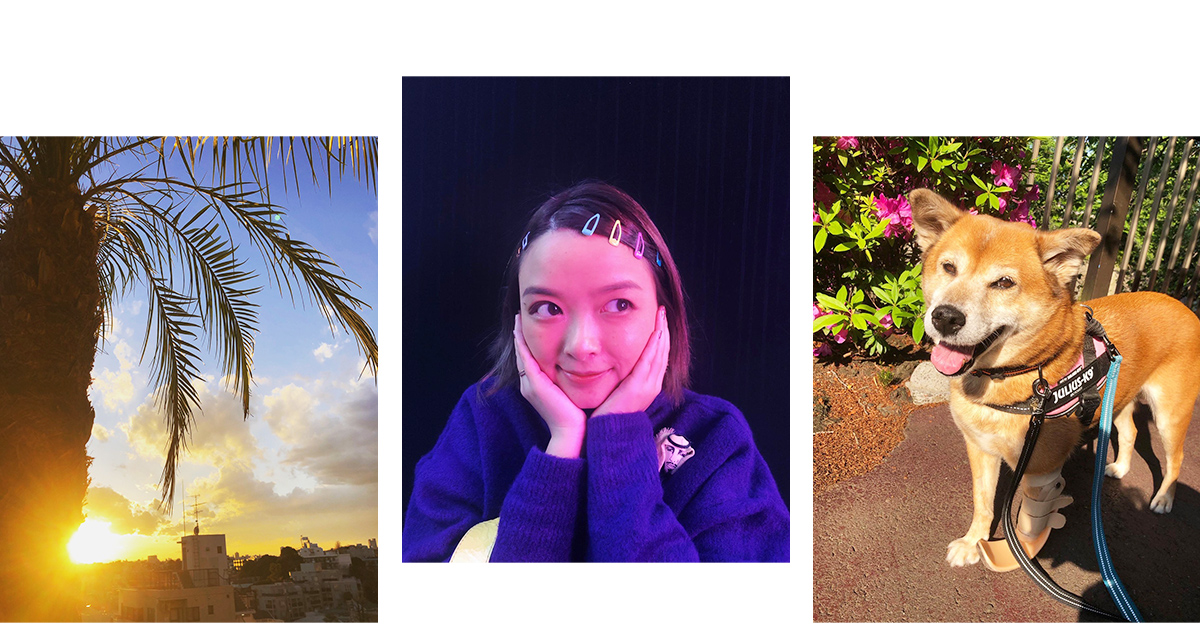
Vicky is the gentle and loving owner of Happy, a rescue dog with only three legs. They have been a family since July 2021. Living with Happy, who is wary of human beings, Vicky experiences unexpected feelings and love. On her days off, she and Happy sit together on her veranda, enjoying a beautiful sunset. She is happy, she says, looking at the 3m+ tall palm tree she bought for Happy. Vicky’s Instagram account is @acutesoupdumpling
Remembering My Dad
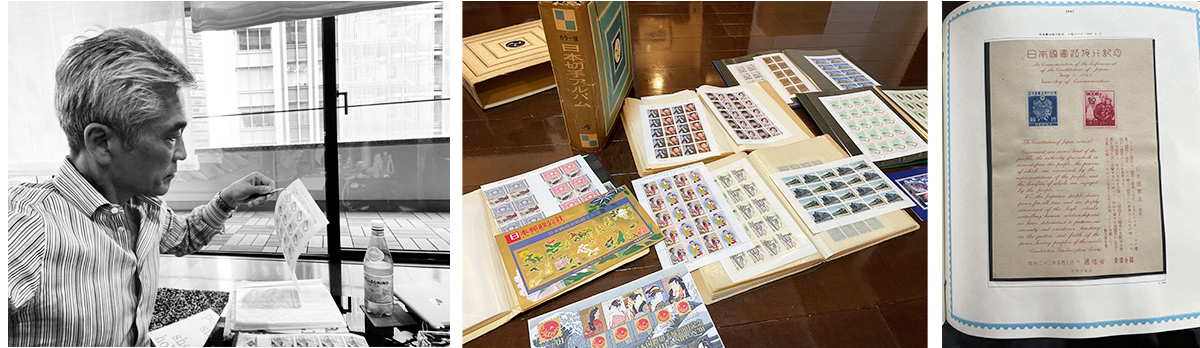
A worn, thick stamp album is Sano’s “one of a kind.” Back then, more than 40 years ago, stamp collecting was booming among boys in Japan. Most elementary and middle-school boys collected stamps, not for postage, just to appreciate them. As a boy Sano was so immersed in this hobby that he neglected his studies. Why? His father’s hobby was stamp collecting.
“While my father bought expensive stamps, my own collection was stamps that my allowance allowed me to buy. Remembering, I am truly filled with nostalgia!”
There are stamps issued before the war, and rare commemorative stamps. It may be crude to say so, but this collection could be sold for a lot of money… When I asked Sano about this idea, he said, “I could sell them at a high price, but I would never think of doing that.” Why? For Sano, this stamp album is filled with memories of his father, where he can still glimpse his dad (How cool is that!).
Sano was in his second year at university when his father, only fifty years old, passed away. At the moment he lost his father, Sano stopped collecting stamps. But as an adult, however many times he moved, he never let go of this stamp album. He always kept it close, he says.
“Back then the stamps my father bought seemed too plain and simple. I didn’t understand at all what made them good (I was just a child). I was fascinated by the cheap, colorful stamps that I could buy. Now, when we started talking about at UNI-SIGHT, I opened this album for the first time in a long time and understood my father’s feelings. That could be because I am now older than my father was back then (he chuckles).”
When I ask Sano what he collects recently, he replies without a moment’s hesitation, “Zero Halliburton attache cases”. Many of our NAKAMA may have seen Sano carrying his red attache case as he walks briskly around Roppongi. We might even say that his red case has become his trademark. But “Does he always carry the same case?”, this writer wondered (laughs). That is how I discovered a new fact. Sano carries one of six cases, all the same format, all the same color. Which case depends on how he will use it. Yes, Sano is crazy!
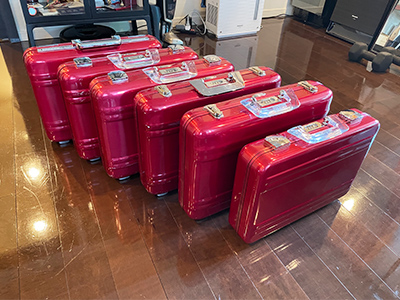
He smiles as he explains, “On days off I mainly carry the small size. The others are all the same size, but the designs of the handles and clasps are different. Which I use for what varies from day to day.”
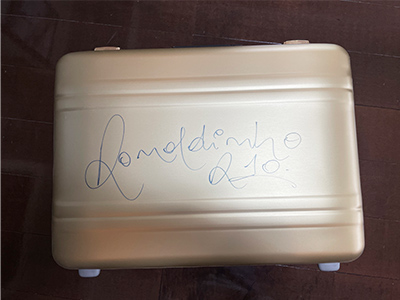
During our interviews, I was stunned to see that he also owns a gold attache case. The UNIVA gold color of this Zero Halliburton case is full of company spirit, and the case is decorated with a Ronaldinho autograph. It is kept at home as a cherished decoration.
“Japanese Beauty” Fills This 400-Year-Old Tea Bowl
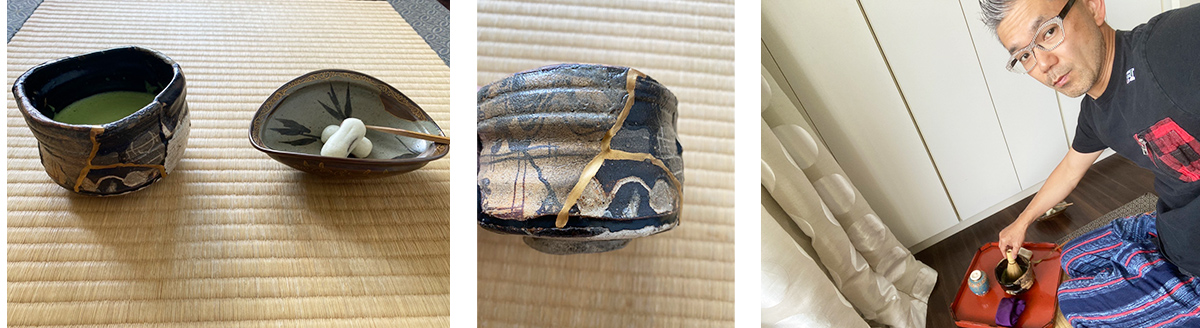
Asakura is the one in charge of UNIVA CAPITAL Group branding. He is known for his breadth of knowledge, his interests range widely, his fashion sense is highly individual. When I asked what was Asakura’s “one of a kind, precious something,” what came back via LINE was a photograph of a slightly dirty tea bowl.
To discover Asakura’s primal experience with the fascination of tea bowls, we must go back to when he was in elementary school. On a school trip to Kyoto, his fellow students bought wooden swords, pennants, and key holders. Asakura was entranced by tea bowls and instead of souvenirs bought this tea bowl in its special box. Several decades later, seven years ago, when a grown-up Asakura began serious study of tea ceremony, he encountered an antique Korean Goryeo tea bowl made in the 12th century, and the flame of his love of tea bowls was reignited.
His collection now includes nearly ten tea bowls. Most are antiques, but what does Asakura prize in them?
“I didn’t deliberately set out to collect antique tea bowls, but as it turned out many are old. Most contemporary tea bowls are designed for convenient use in everyday life. Formerly tea bows were used as gifts to the Emperor or other aristocrats. In the heat of the passion that went into their creation and the quality of the result, they are totally different from their contemporary counterparts.”
Asakura’s most prized tea bowl is a Kurooribe (black oribe) tea bowl created during the Momoyama Era (c. 1600 CE). It was produced by Sen no Rikyû’s disciple Furuta Oribe and embodies Rikyû’s wabi-sabi world view in radically new form and design. It was fired in Mino (now Gifu Prefecture), where, it is said, pottery was only made for 50 years, which makes this Oribe tea bowl more valuable because of its rarity. Its price today would be the equivalent of that of a top-class luxury automobile.
“If this were a completely undamaged tea bowl, the minimum price would be 5 million yen. It is, however, a patchwork of fragments of ten previous tea bowls. I have given this bowl the name “Ten Men, Ten Minds” and use it at tea gatherings, when practicing tea, or enjoying tea at home.”
Asakura says that to him this “patchwork” epitomizes the appeal of Japanese aesthetics. Many of us are now familiar with kintsugi, a Japanese repair technique that dates back to the Muromachi Era (1336-1573). This world-renowned technique for repairing broken pottery or porcelain uses lacquer mixed with gold, silver or platinum to fill gaps and reconnect the broken fragments. This type of repair is what makes this tea bowl a precious “one and only” for Asakura.
“When Western paintings or pottery or porcelain objets are damaged, they are regarded as works of art and ‘restored’ to make the damage invisible. In Japan, we don’t ‘restore,’ we ‘repair.’ Repair makes something reusable. Thus, for example, repairing a tool makes it usable again. Function is seen as more important than appearance, but repair is more than making something usable again. The aim is to enhance its original beauty. Not to eliminate damage, but incorporate it as history and create something new. This Japanese sense of beauty is what I love so much about this tea bowl.”
Kintsugi and patching are drawing attention worldwide as epitomizing Japanese aesthetics. The origin of these repair techniques is, I believe, the Japanese senses of mottainai “What a waste” and “affection for material things.” These feelings, deeply rooted in our culture, are an historic legacy, whose beauty now appeals to people around the globe.
Vicky-san, Sano-san, Asakura-san, thank you so much for these interviews.
I ask all of our NAKAMA, don’t you have some very precious, “one of a kind” something to share with us? We are thinking of making this a UNI-SIGHT series and need your input. Please send your proposals to our editor, Juan. Send, and keep sending, more and more. Send your ideas and contributions to zheng_juan@univacap.com