UNI-SQUARE
Youth is not just the bloom of life, This is the season of preparation for the coming fall of fruitfulness. by Yosaburo Takekoshi
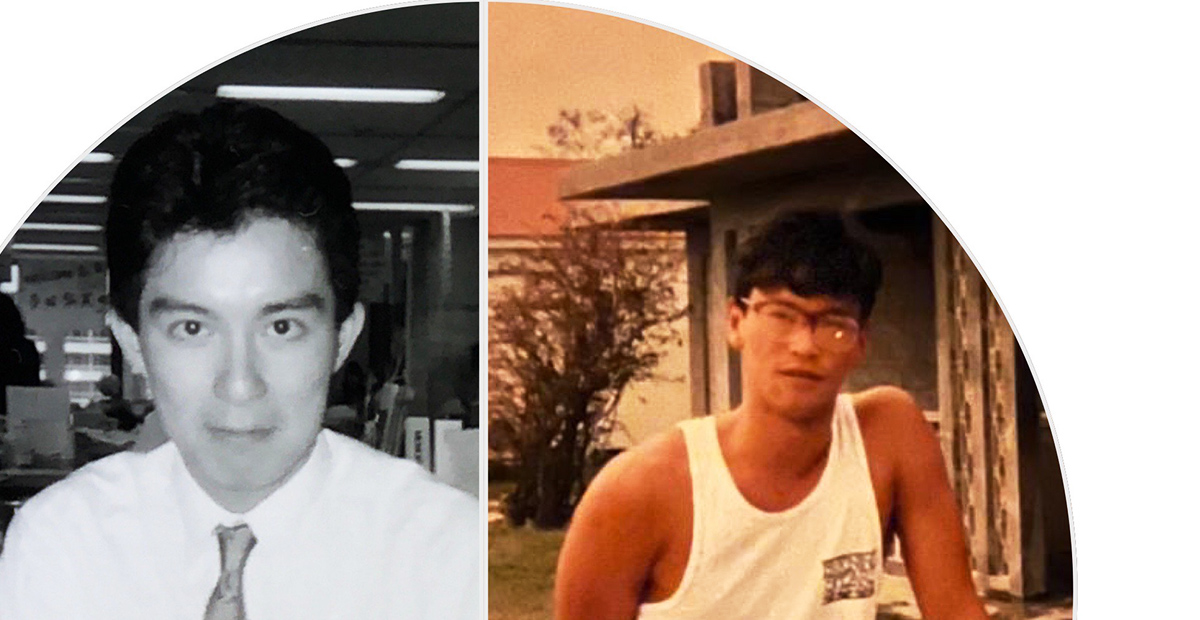
Can you recognize who it is from the picture on the cover? LOL!
March. Spring, when all things come back to life. Graduation season has come again this year! And next month, we will be welcoming new NAKAMA, new members of society.
Do you NAKAMA members remember your first year in the workforce? For some, it is still fresh in their minds, while for others, it was a long time ago. In the March issue, we will introduce NAKAMA's vernal years. We asked Mr. Murakami and Mr. Tsuruta, who concurrently hold many executive positions within the group, about their time as new graduates. Let's look at it together!
Hideto Murakami
Representative Director, UNIVA Corporation Limited
Representative Director, Univa Technologies, Inc.
Representative Director, Univa Communications Inc.
Director, UNIVA Paycast Inc.
Director of UNIVA Marketing Limited and Representative of Japan Branch
Director, Rhizoma Business Inc.
Toshihiro Tsuruta
Director, UNIVA CAPITAL Investments Limited
Director, UNIVA CAPITAL Holdings Limited
Director, UNIVA CAPITAL Hong Kong Limited
Director, UNIVA Energy Limited
Director, Bax Company Limited
Director, MILET HK LTD
Chairman, UNIVA (Guangzhou) Trading Co., Ltd.
Representative Director, UNIVA Asset Management Limited
Representative Director, UNIVA Trade Corporation
Joined Recruit from the University of Tokyo's Faculty of Engineering
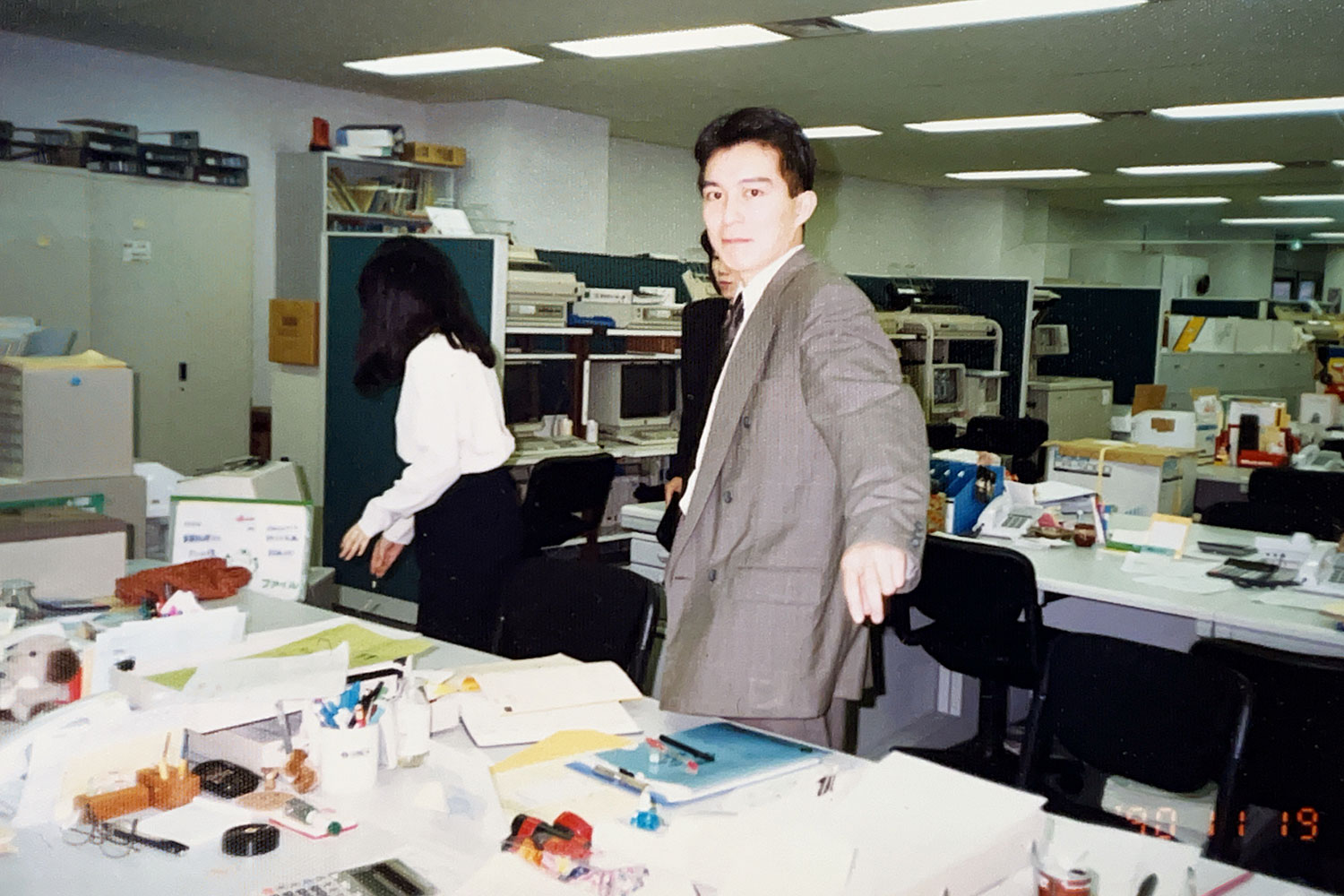
Mr. Murakami is a graduate of the University of Tokyo's Faculty of Engineering. Did you have a strong determination in choosing the University of Tokyo and the Faculty of Engineering?
"My father worked as a designer for a machine manufacturer, so I had an image of becoming an engineer. In high school, I entered the science class and took the entrance exams of the top-ranked universities. I felt it was lucky if I could be accepted to a national university because of its low tuition fees. I didn't get a passing grade from the University of Tokyo on the practice test, but on the day of the exam, something came down (laughs), and when I passed, the first thing I thought was that I was able to show filial piety."
Mr. Murakami says so matter-of-factly. Wants to go to the University of Tokyo because of the low tuition fees, (Juan is astonished😮) but wait! You entered the University of Tokyo's engineering department with the goal of becoming an engineer, so why are you going into Recruit?
"At the time, most science students were going on to graduate school, but I was not attracted to university laboratories, so I decided to find a job. I considered various companies, including major manufacturers, banks, and securities firms, but something about major companies didn't intrigue me because I felt I could easily imagine my life after joining them. It was then that I felt the 'excitement of not knowing exactly how things would turn out' at Recruit."
When Mr. Murakami joined Recruit in 1988, the company was hiring large numbers of science students to expand its information and telecommunications business. In a company of 3,000 people, 1,000 were new hires! Mr. Murakami looks back on those days with a smile, saying that he was taken in by that recruitment strategy.
Worked with a lot of spontaneity during the rookie years
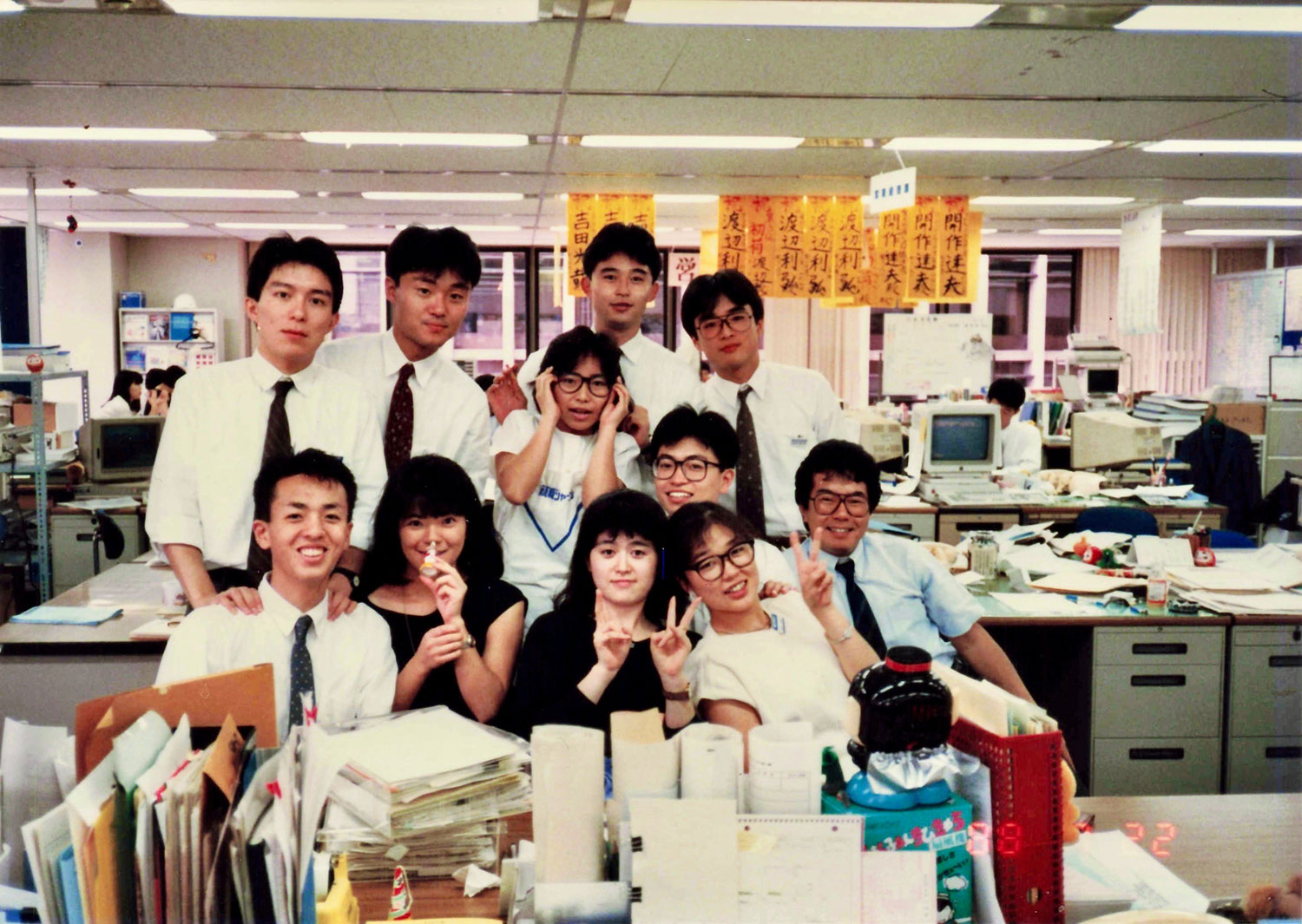
Mr. Murakami was first assigned to the accounting department of the Information Technology business. Were there any surprises or complaints?
"There was none at all. I was interested in the structure of a "stock company," which was booming at the time, its decision making, and the movement of money, so I wanted to be assigned to a department close to management. My first job was cost management and asset management for the information and telecommunications business. Later, I gradually became involved in business planning and budget management. Although it was in a completely different field from my major at university, I think the knowledge and ideas I learned as an academic subject have been useful in various aspects of my work."
What kind of employee was Mr. Murakami when he was new?
"Most of the employees at that time were young, in their twenties, and I think they were allowed to do things relatively freely. I was serious about my work, but I may have been a 'lickspittle employee' in terms of attitude. When I first joined the company, I was the kind of newcomer who, when a senior employee taught me a job, would say, "I'll refer to that," instead of "I understand" (laughs). I think I had the habit of not only doing as I was told, but also thinking in my own way about how I could do my job better, even as a new employee."
In the employee introduction materials at the time, there were descriptions of his character such as "to the point" and "somehow he manages to keep his books in order" (laughs). What dreams and ambitions did the young Murakami have?
"At Recruit, there were many employees who talked about 'becoming president,' but I had a bit of a hard time with those cheerful, pushy people (laughs). I am the type of person who wants to feel good about reality rather than talk about dreams, and I think it is my engineer nature to want to do something when something is not going well. There were many unique people at Recruit, but it was a wonderful environment where I didn't have to worry about strange relationships such as factions or backbiting."
Work is an opportunity! I never refuse!
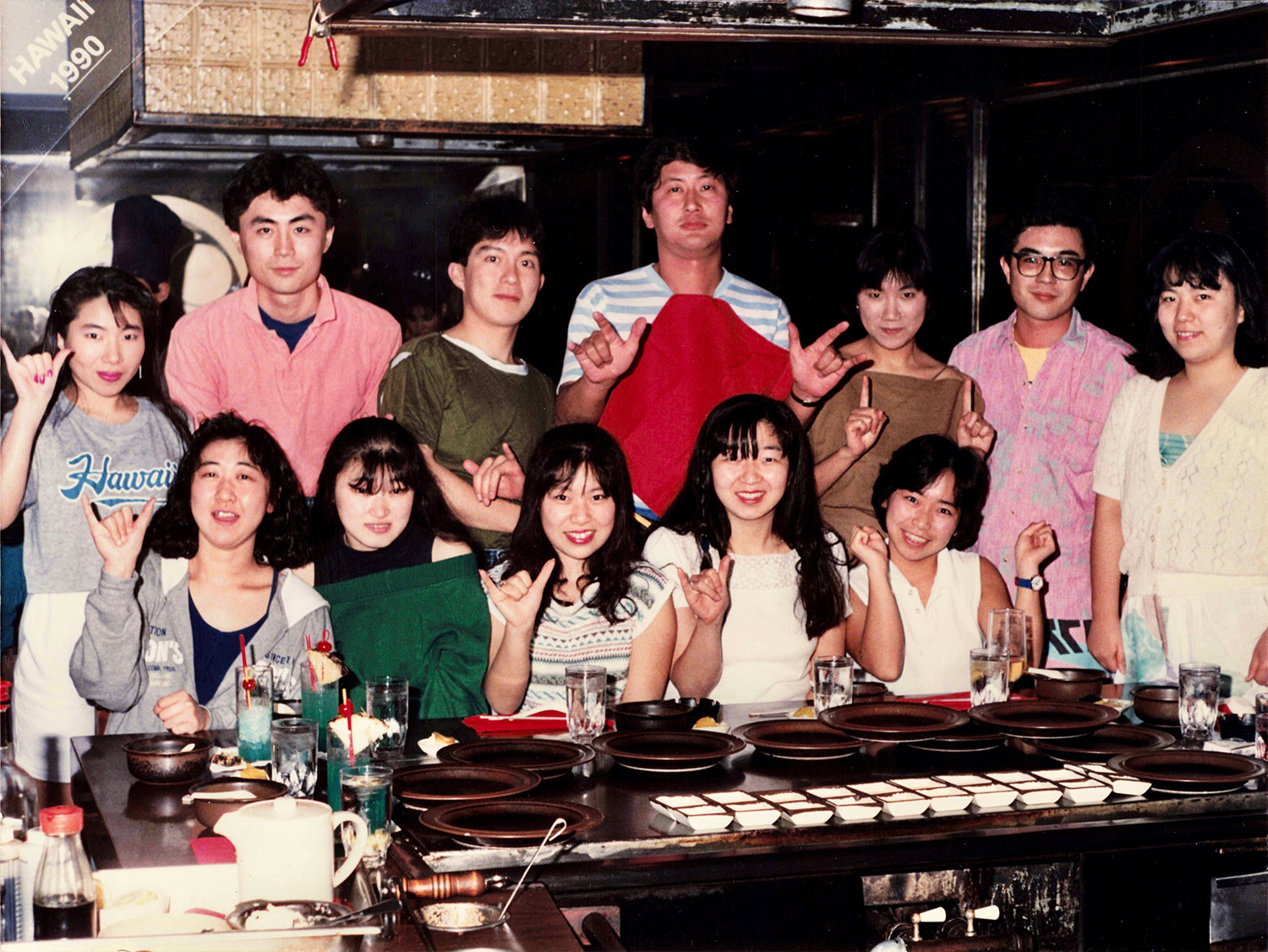
Guess who Mr. Murakami's wife is? Let us know in the comments section!
Since then, Murakami-san has worked in various departments at the head office, including corporate planning, game magazines, and satellite broadcasting, and his work experience has been diverse, not only in business management, but also in website management, program production, and video distribution. At the last subsidiary he worked at during his time at Recruit, he was in charge of all back-office operations, including personnel and labor affairs, and was also involved in M&A. Mr. Murakami says that he learned everything he could about how a company works.
"I have never really thought about "challenge," but when you do a job for the first time that you have never done before, it may all be a challenge in a sense. Even if the job is not a big deal once you have done it, you may feel uneasy until you have a good idea of what to expect. However, there are skills, experiences, and views that you can acquire by experiencing the job for the first time. I have basically taken the stance of never turning down a job. All of my work experiences have helped me get where I am today."
Not only did he have a successful career at Recruit, but there was also a major life event for Mr. Murakami.
"I was a team leader in my third year with the company, and I was often disliked for redacting too many details in documents prepared by a female member of the team. But about a year and a half later, she became my wife (laughs)."
Finally, do you have a message for young employees?
"I hope that young people in particular will see the work in front of them as an opportunity, and actively think and work on their own. Many jobs can be acquired as skills and experiences. If a job is not necessary, eliminating it is also an achievement. I am now 58 years old, but I will never lose the desire to take on new challenges."
From Hell to Paradise: The Turbulent Twenties

The young Tsuruta came to the U.S. dreaming of the "American Dream," a far cry from Murakami's story that he "never had a dream." Through a childhood friend who had studied in the U.S., Tsuruta was introduced to a company that had many gift stores in the U.S. and abroad, headquartered in San Francisco.
"The president of that company drove a Porsche, lived in a mansion in San Francisco, and was really cool. I really thought, I'm going to go to America and become successful, too!"
When he was a student, Mr. Tsuruta worked part-time to save money and enjoyed traveling to the U.S., but his English was nonexistent. He says it didn't work at all at work.
"The main customers of the gift store in the tourist area were Japanese, but foreign tourists also come to the street store in a prime location. It's a small store, so it's all a one-man operation. I had to get by using only high school-level English and gestures. Every day was an ordeal."
When I hear stories about the time in the U.S., I hear such miserable keywords as "hell," "endurance," and "training." The instructor was a physical education system of the Showa era. At the time, there was no time for lunch, and often a hot dog from a nearby stand would take five minutes to finish while standing. He hated to even look at it. Mr. Tsuruta, who has no car, no money, and no a single happy memory, has a turning point.
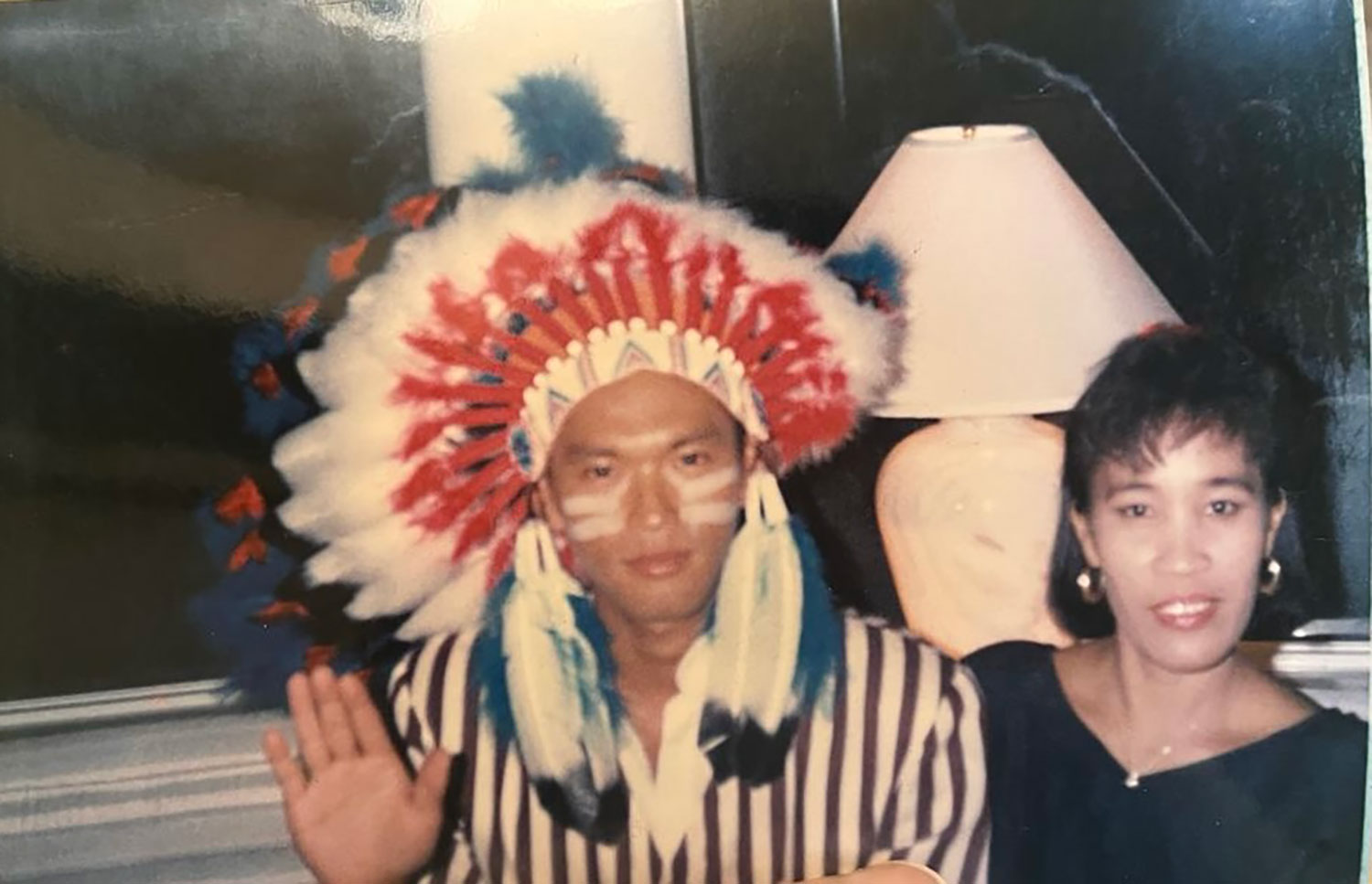
"When I started working in Saipan, every day was paradise. I was in charge of five stores in the hotel and in town, so I was the boss. The pay wasn't that great, but I got to spend my breaks on the beach in front of me, and I was given an apartment with a pool and a car. It was great!"
From Debt to Billion Dollar Business and Bankruptcy
Blue sky and blue sea. After a year and a half of such days, Mr. Tsuruta began to feel uneasy. Although he was still young, he decided to leave the company and emigrate to Hong Kong in 1991, as he felt that he could not go on like this.
He said, "I bought a sewing factory in a building in a factory district with a former senior colleague who was a manager in Hong Kong, and we started manufacturing and selling silk products. But when we opened the lid, the company was in debt. We were cheated. Debt collectors came and took everything from the factory, including sewing machines, hangers, and products, leaving it empty. We borrowed products from other manufacturers and turned the empty factory into an outlet store, selling them to tourists, which was a big hit. It grew into a business with annual sales of up to 1 billion yen or more."
However, after the return of Hong Kong to China in 1997, the number of clients declined, and the company went bankrupt in 1998. I am also disassociating from my senior because we are gradually coming to terms with the way the company is run and the way it was folded at the end.
"I lost everything and really had nothing. Moreover, my wife was pregnant at the time. We couldn't even rent a house, so she went back to Japan by herself, and I lived in a small apartment with the remaining staff. In order to make ends meet, I started a trading business that required no capital."
Mr. Tsuruta recalls that he had no other choice. Starting with the business of importing Hong Kong goods to Japan, the business later developed into exporting Japanese goods to Hong Kong, and even supporting the Japanese government's export and reconstruction projects.
"I did whatever I could with my connections and ideas."
My motto is "One silent smile."
He founded BAX in 2004 and joined the UNIVA Group in 2009. In 2011, he became Director of UNIVA CAPITAL Hong Kong Ltd. He now serves on the boards of nine companies. Mr. Tsuruta has truly led a tumultuous life. Mr. Tsuruta's motto was something I had never heard before: "One silent smile."
"It was a phrase I read in the newspaper when I was in elementary school. I think it was a word coined by some monk in an essay he wrote. It had a tremendous impact and stuck with me. I remember this phrase when I get angry or when my emotions are aroused. I guess it is a reminder to myself to shut up and smile for once."
Finally, please give a message to young NAKAMA.
"The key to my life is encounters with people. The connections I have made through these encounters have become my most important asset. It is truly the UNIVA WAY. Until I met Mr. Inaba, I had crossed the rough seas of business with 'win-win' as my motto. But I realized that if I started to be aware of the 'win' at the end of 'win-win-win', the surroundings and the whole beyond the other party, things would develop even more smoothly. I am not saying this because I am an officer of UNIVA, but I believe that this direction of thought will contribute to them and to you, and will enrich your work and your personal life."
Thank you, Mr. Tsuruta, for your inspiring talk! We look forward to hearing good news about your full marathon completion.