UNI-SQUARE
UNIVA AWARDS 2025 Special Feature
Embrace Change, Shape the Future.

Four Challenges Beyond the Numbers.
The UNIVA AWARDS is not merely a venue for celebrating achievements.
It is a stage that celebrates challenges where people faced the essence of problems without fear of change, and forged a path to the future by engaging their peers.
What this year’s winners had in common was that they never considered “maintaining the status quo” as an option.
Market shifts, rising costs, organizational expansion, globalization—
Although each faced different challenges, they viewed these obstacles not as “constraints” but as “starting points for evolution.”
UNIVA Paycast, winner of Company of the Year for the second consecutive year.
Ryota Hasegawa of North Energy, who delved into the very structure of the business.
The Logistics Management Team at Naturally Plus, which achieved an unprecedented logistics overhaul.
And the Sales Department team at UNIVA Paycast, which redefined the conventions of sales.
What we saw was not merely improvement.
They were each team’s answer to the question: “How will UNIVA shape the future?”
Company of the Year
UNIVA Paycast Co., Ltd.From a “payment company” to a “financial infrastructure” provider.
The reason for winning two years in a row.
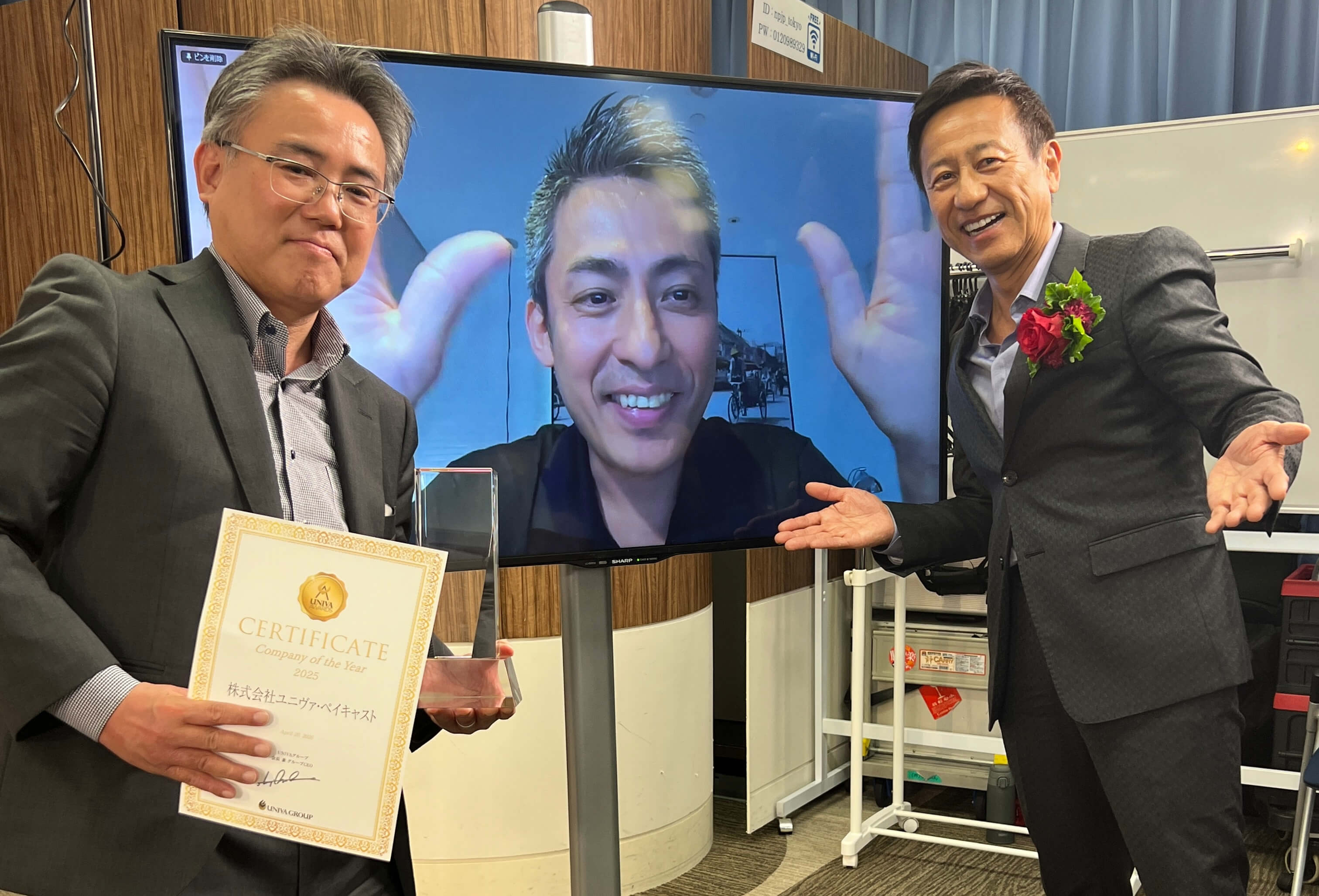
UNIVA Paycast (UPC) has been named Company of the Year for two consecutive years.
However, this award is not merely a recognition of business performance. Its essence lies in the very evolution of the company as it seeks to transcend the boundaries of a “payment company.” In fiscal year 2025, UPC maintained stable growth in its domestic payment business while simultaneously advancing large-scale investments and structural reforms with an eye toward the next era.
Payment transaction volume reached 196 billion yen, a 128.1% increase year-over-year.
The number of transactions processed was 8.91 million.
Operating revenue reached 121.1% of the previous year’s figure.
This growth was driven by the steady expansion of domestic small and medium-sized franchisees. Against the backdrop of the growing social media business, side-hustle market, and sales of intangible content, UPC collaborated with business tool vendors and held joint seminars. Over the nine-month period from April to December 2025, the company achieved a net increase of approximately 4,000 contracts.
However, UPC’s goal was not merely to increase the number of merchants.
Their goal was to move into the “upstream of payments.”
The launch of "PayVerse Japan," a joint venture with a South Korean partner, symbolizes this shift. Through this initiative, UPC is moving beyond its traditional role as a PSP (Payment Service Provider) into the acquiring domain. The company is evolving into an entity responsible for merchant management, screening, and risk control.
This is not merely a business expansion.
It was a challenge to penetrate the very structure of the payment industry itself.
Furthermore, UPC is building a next-generation financial infrastructure, including the development of an FX revenue model based on foreign currency payments, support for companies entering the Japanese market, support for companies expanding overseas through partnerships with overseas PSPs established from the outset, as well as global remittances, early payments to merchants, and lending. Underlying this is the determination to “become a force that supports global commerce, not just within Japan.”
Of course, this challenge is not an easy one.
Advanced screening, risk scoring, transaction monitoring, and the use of AI—
Behind this new growth lies the need to build extremely sophisticated operational systems.
Yet UPC never stopped.
“More Than Us, More Than PSP”
The theme we’ve adopted this time symbolizes that determination.
Going beyond our own boundaries, beyond the boundaries of the industry, and moving forward.
Winning this award for two consecutive years is not a recognition of past successes.
It was a testament to the expectations for our evolution toward the future.
WINNER
North Energy Co., Ltd.
Ryota HasegawaHe took on a loss-making business and transformed its structure.
Reforms born from a “determination to keep explaining.”
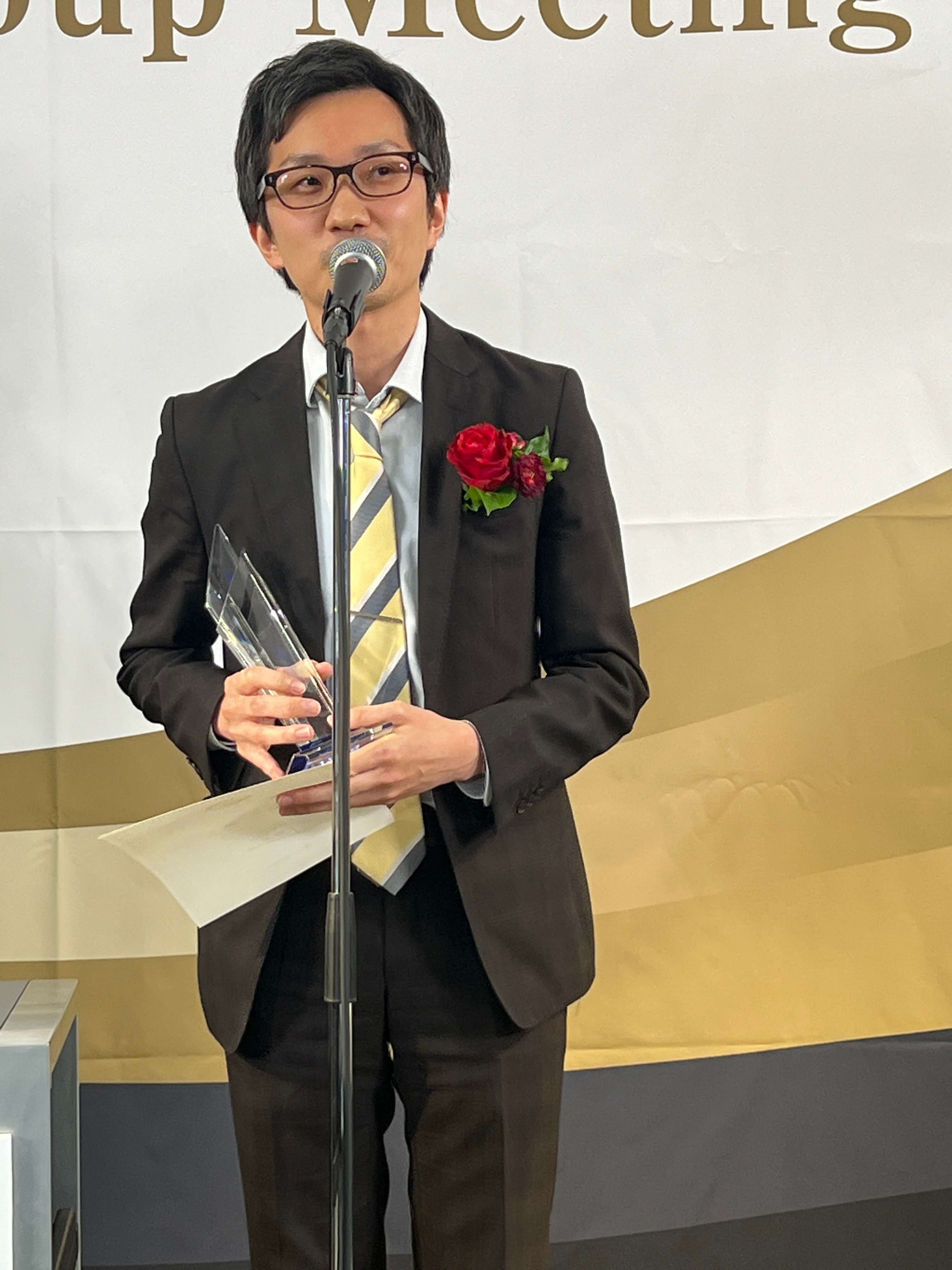
“Can this really be changed?”
Revising maintenance contracts that included fire insurance had been a long-standing challenge for North Energy.
While maintenance contracts for low-voltage solar power generation facilities had traditionally included fire insurance, the burden had grown rapidly due to soaring insurance premiums in recent years. By fiscal year 2023, the maintenance business itself had fallen into the red.
Ryota Hasegawa confronted this situation head-on.
His approach was not merely about cutting costs.
It was a “business reform” that involved rethinking the contract structure itself.
He scrutinized the coverage details and revised areas with low cost-effectiveness. Furthermore, he separated the insurance contracts that the company had previously bundled into a single package, shifting to a structure where customers could select the insurance that best suited their needs.
However, as expected, there was some pushback.
“Why change it now?”
“Doesn’t this mean a decline in service quality?”
As the number of complaints increased, Hasegawa remained on the front lines of customer support.
Contract terms, cost structures, risk differentials—
Rather than relying on intuition, he engaged in careful, case-by-case dialogue using numbers and real-world examples.
As a result, the maintenance business, which had posted a deficit of approximately 2.24 million yen in fiscal year 2023, turned a surplus of approximately 75.54 million yen in fiscal year 2025. This achieved an annual profit improvement of over 70 million yen.
However, the essence of this achievement lies not solely in the numbers. What Hasegawa accomplished was questioning the “status quo” and redesigning the very sustainability of the business. Furthermore, this initiative demonstrated future potential as an “inclusive contract review model” that can be applied to other services.
Change inevitably brings pain.
Nevertheless, we faced the challenges head-on, continued to explain our approach, and gradually built understanding.
It was through this persistent dialogue that the future of the business was opened up.
View Hasegawa’s presentation here: https://youtu.be/K9rl9h5QMUU
WINNER
Naturally Plus Japan Logistics Management TeamDon’t use “there’s no precedent” as an excuse.
The 27.7 million yen impact generated by logistics reform.
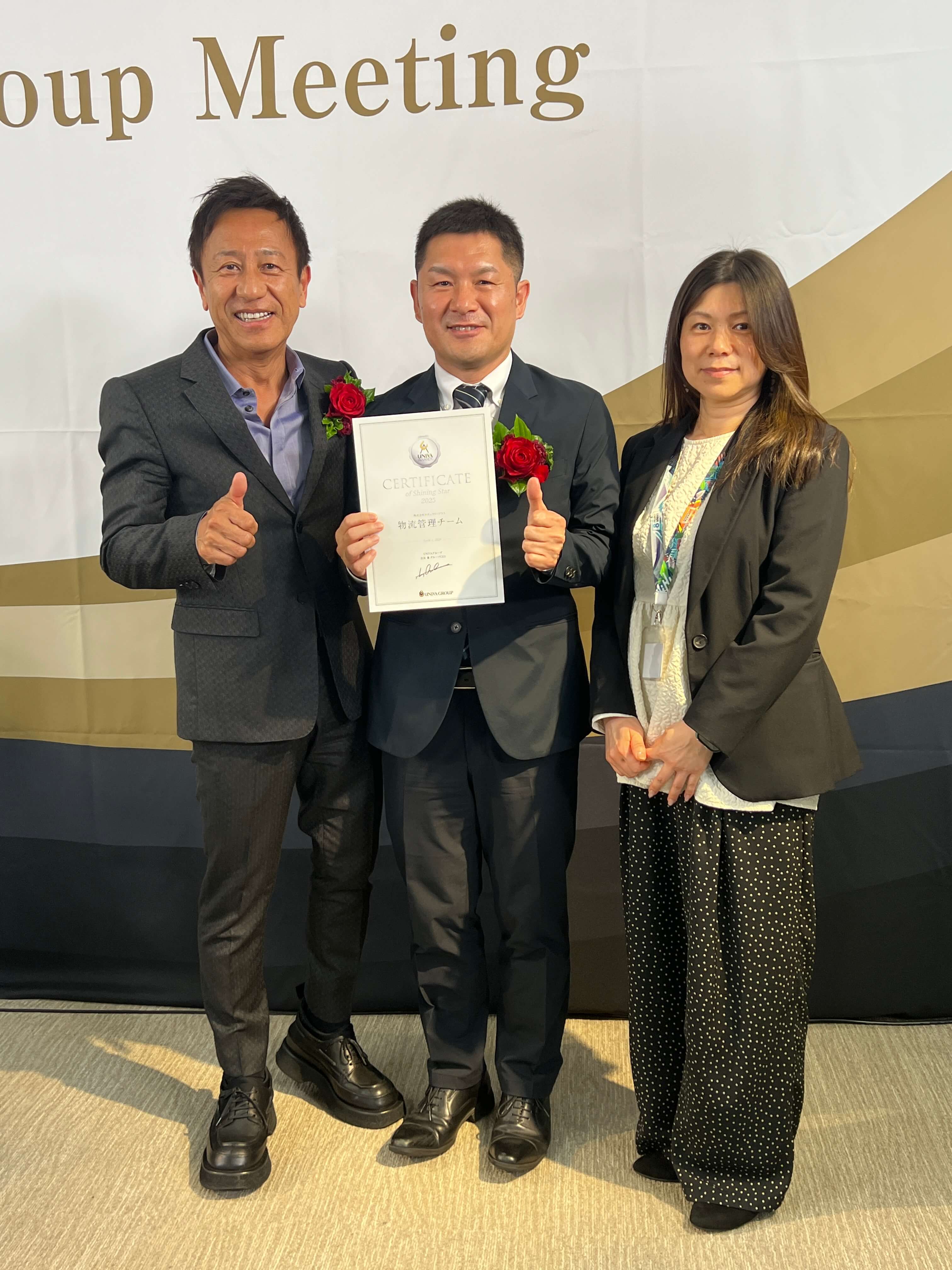
Changing delivery carriers.
It sounds simple, but for Naturally Plus Japan, it was an “unprecedented decision.”
They had been working with Yamato Transport since 2015. However, starting in 2017, repeated rate revisions caused shipping costs to rise significantly. Furthermore, combined with the surge in logistics costs due to the “2024 Problem,” the impact on our profit structure had reached a level that could no longer be ignored.
The logistics management team did not face the question of “how to accept the price hikes.”
It was to completely overhaul the entire logistics system from scratch.
They collaborated with SBS Logicom, a partner in the Hokkaido and Eastern Japan regions, to reanalyze the delivery network, inventory placement, and transport distances. Based on this, they undertook a major overhaul: redesigning the nationwide delivery structure and gradually switching the delivery carrier from Yamato Transport to Sagawa Express.
As a result, shipping costs for all package sizes were reduced by an average of 25%.
This is expected to yield annual savings of approximately 24 million yen.
Furthermore, they reviewed the shipping categories at their logistics warehouses.
By increasing the proportion of shipments to locations closer to the factory, we reduced procurement-related expenses by approximately 3.7 million yen annually.
This generated a significant total impact of 27.7 million yen.
However, this reform was by no means smooth sailing. At Sagawa Express, there were concerns about a decline in service levels because cash-on-delivery would no longer be available in some areas, and many objections were raised both internally and externally.
Even so, the logistics management team refused to give up on balancing “cost reduction” with “customer experience.” For areas where cash-on-delivery is not available, they designed a hybrid operation that continues to use Yamato Transport. Furthermore, in collaboration with UNIVA Technologies, they built a system that automatically switches delivery carriers based on the delivery region.
Field operations, sales, systems, and logistics.
This reform, which involved numerous departments and our NAKAMA, was more than just a logistics improvement.
Rather than saying, “We won’t do it because there’s no precedent,”
"We do it because it’s necessary for the future."
That mindset was the very reason we received this award.
Click here for the Logistics Management Team’s presentation: https://youtu.be/LR_S-02LhnE
WINNER
UNIVA Paycast Sales Department TeamQuestion the notion that “sales is a people-driven function.”
The future of sales organizations transformed by Sales DX.

Sales is handled by people.
Sales representatives handle each inquiry one by one.
That was the conventional wisdom until now.
However, in fiscal year 2025, the Sales Department at UNIVA Paycast challenged that very notion. The backdrop to this was the rapid expansion of the sales organization’s role. In addition to traditional new merchant acquisition, the required responsibilities—such as preventing existing merchants from leaving and handling overseas projects—have become increasingly sophisticated year by year.
How could we maximize gross profit with limited resources?
The answer the Sales Department team arrived at was to “optimize the allocation of sales resources.”
They designed a “strategic sales framework” that automates routine inquiry responses and redirects those resources toward high-value-added opportunities. The revamped inquiry form collects information necessary to assess a lead’s viability at the initial contact point. Furthermore, by integrating Account Engagement (an MA tool) with Salesforce, they built an end-to-end system that handles step-by-step emails, automated follow-ups, survey branching, and automated replies based on the lead’s status.
As a result, 47.8% of inquiry cases were handled automatically.
Meanwhile, we limited the decline in application rates to just 7%.
Even more interesting was the mechanism behind the “follow-up emails.”
"I don’t know how to apply"
"Comparing with other companies"
"I’ve temporarily put my consideration on hold"
We implemented a personalized design that tailors the reply based on the customer’s response.
This resulted in 36.5% of survey respondents proceeding to apply.
However, the essence of this initiative is not merely automation. What they achieved was a structural reform that allowed sales representatives to focus on tasks that truly require human touch. The resources freed up were reallocated to high-complexity projects and support for existing franchisees. Furthermore, with an eye toward future global expansion, this has led to the establishment of a “sales infrastructure capable of growth without increasing headcount.”
The future of sales lies in reducing routine tasks and enhancing the value of human capital.
This initiative was an effort to anticipate and showcase that future.
Click here for the Sales Department team’s presentation: https://youtu.be/Ezjw_cNXHhg
A challenge is a declaration of intent for the future.

The four initiatives recognized at this year’s UNIVA AWARDS 2025 differ in both industry and theme.
However, they all share a common underlying attitude.
That is, “the courage to question the status quo.”
Because it’s tradition.
Because it’s tradition.
Because that’s how it’s always been.
Rather than being swept along by that atmosphere, there were people who kept asking, “Does this truly lead to the future?” And that challenge could never have been achieved alone. It was precisely because they moved forward by engaging NAKAMA across departments and companies that it led to such significant change.
What the UNIVA AWARDS honor is not merely results.
It is the very will to change the future.
What challenges will emerge next year?
It may be us, right here and now, who take that first step.