UNI-SQUARE
Three new employees of UJP gather!
The honest feelings of a working adult with half a year in the workforce
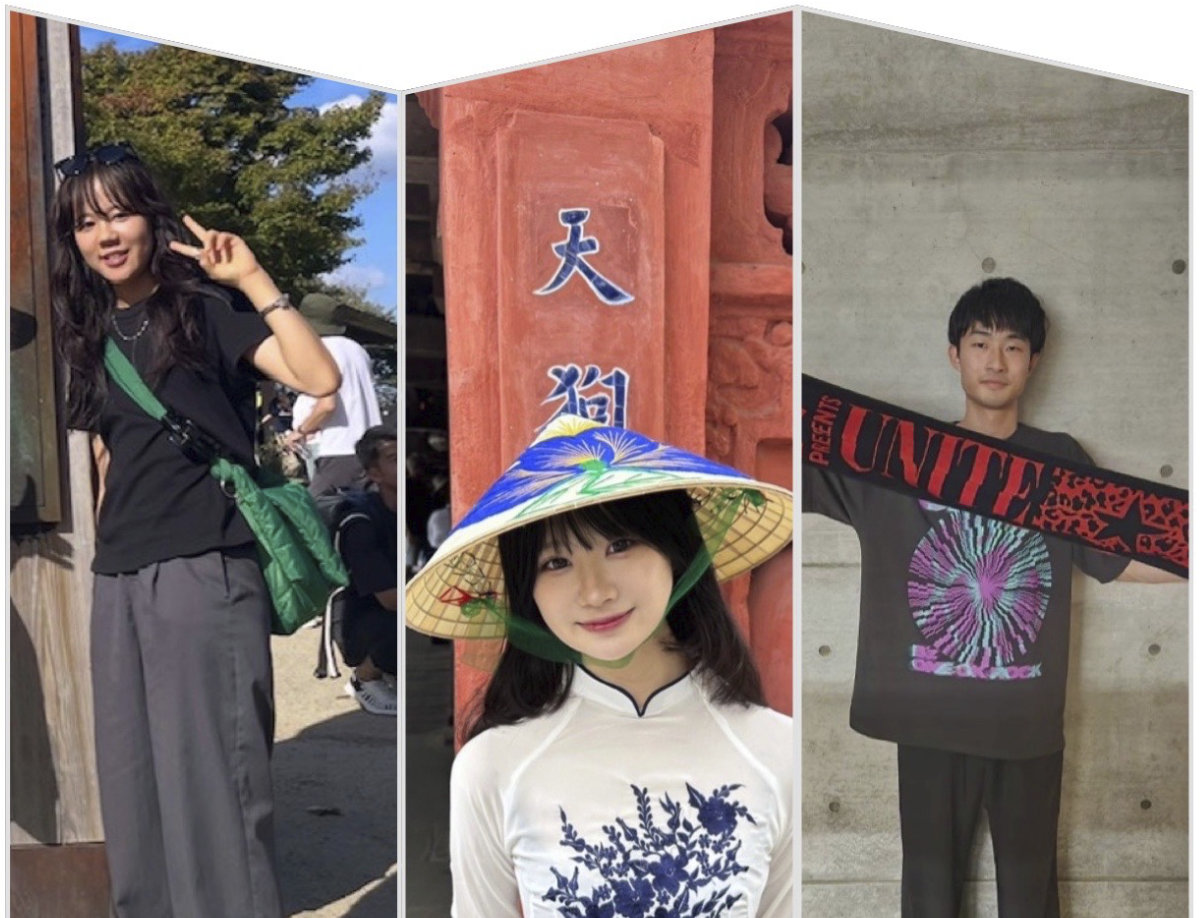
It has already been six months since the new graduates who joined in April 2025 started working. Amid significant changes from being students to becoming working adults, what have they felt and learned?
The October issue of UNI-SQUARE welcomes three new employees from UNIVA Japan (hereafter, UJP). During the first three months after joining, the three underwent a total of eight joint training sessions covering manners, specialized knowledge in each department, and the skills and mindset necessary for their work. In this issue, we would like to look back on their six months together with our NAKAMA. Additionally, we conducted a secret interview with Yao Yao, the human resources recruitment staff at UJP! We believe the message applies not only to UJP but to all new employees in the UNIVA Group, so hope you will read it all the way through. Now, please enjoy the honest and fresh, real-life appearances of our new employees!
Funa Hirano - Office Facility Division, PM1 Section
Toa Murakami - Corporate Planning Office
Hana Wakamura - Facility Division, Design & PM Office
The First Step as a Working Adult
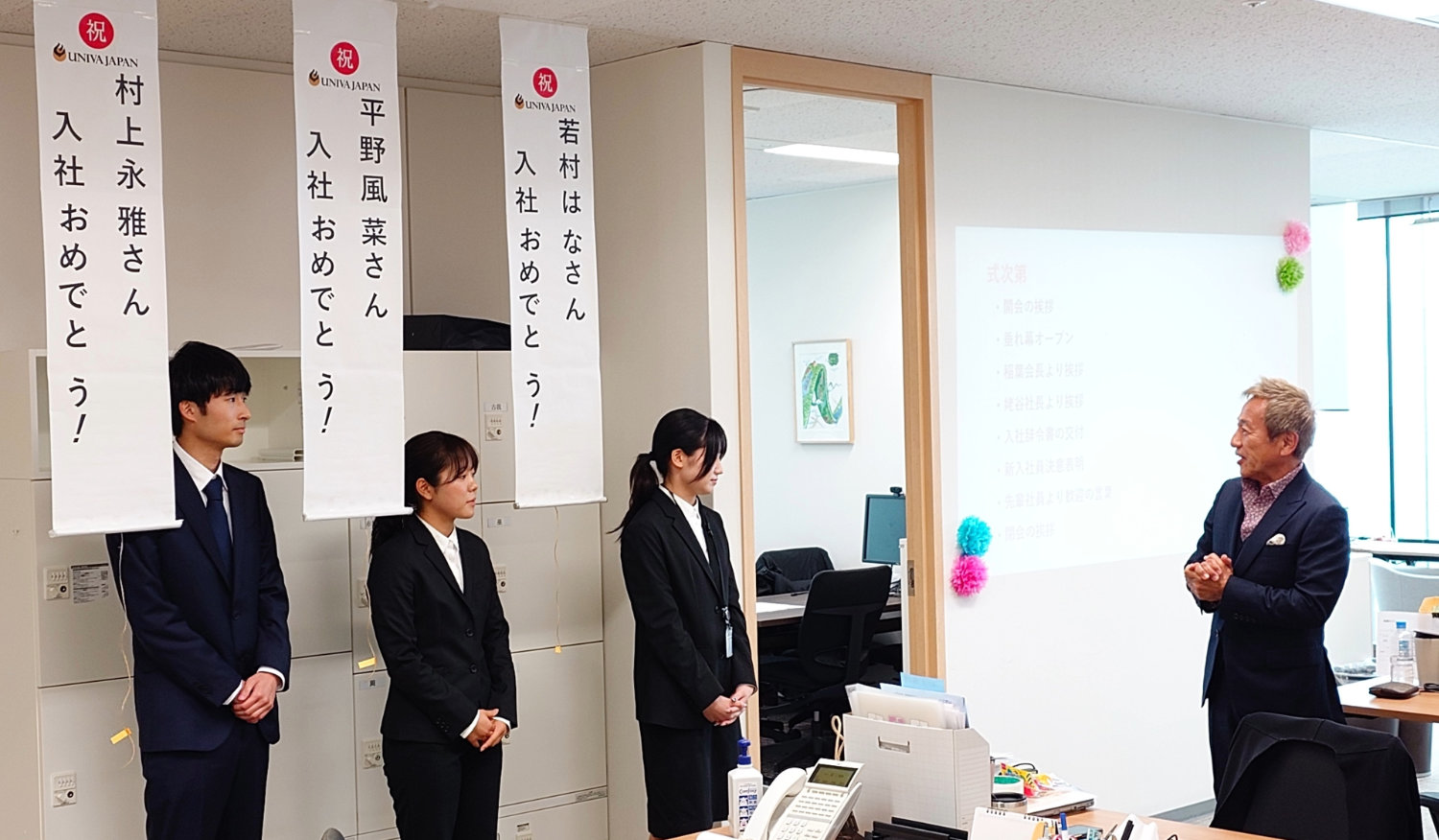
— It's been six months since you joined the company; please tell us your honest impressions.
Hirano: Being a working adult is a physical and mental battle, isn't it? I played soccer during my school days, so I was confident about my physical strength. But I realized that to wake up at the same time every day and work more than eight hours at the company, mental stamina is also necessary. Physically, I have plenty of stamina, but I start feeling sleepy around 10 PM every night (laughs).
Wakamura: That's true! The first week after joining the company felt like each day was incredibly long. After the training period ended and I gradually got used to the work, time flew by like a demon, and a month passed in an instant.
Murakami: At the beginning, I had a lot to learn, which was hard. But every day was filled with new discoveries, which made it enjoyable. As I became able to do more things through my work, I was happy to experience a sense of accomplishment and feel my growth. On the other hand, because my actions directly contribute to the company's results, I keenly feel the weight of responsibility. In terms of "learning," both students and working adults are the same, but learning at a company is practical and carries a sense of tension, right?
Hirano: That's really true. When I worked part-time as a student, even if I made a mistake, I wasn't held directly responsible, but now, every task entrusted to me comes with responsibility. When I think that even one mistake I make can affect the company's profits, I deeply feel the weight of responsibility.
Wakamura: At the same time, I feel that all experiences lead to my growth, so there is nothing wasted. My student days were fulfilling, but even now, in a different way, life is fulfilling.
The first salary, where did it lead...♡
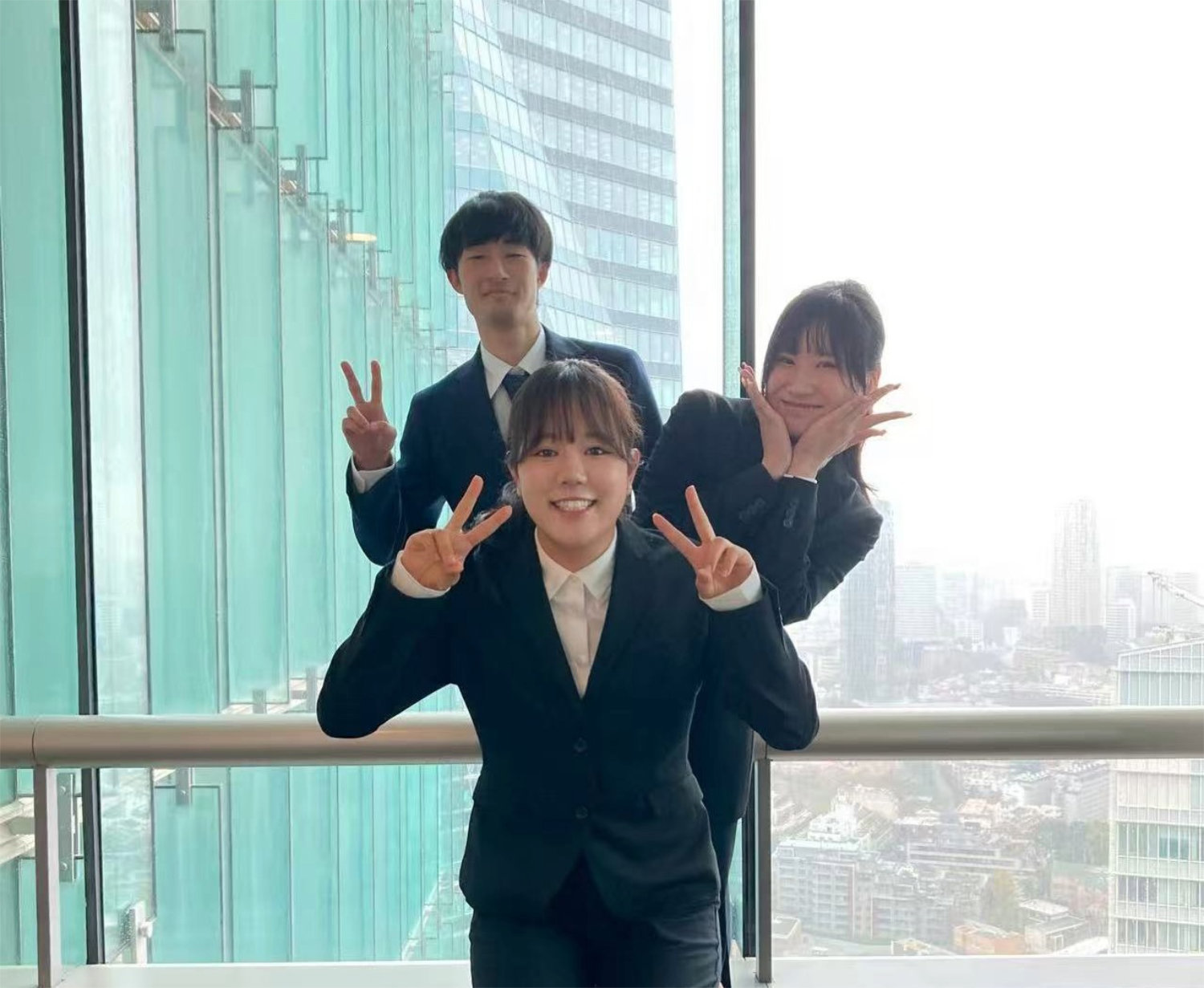
- Please tell us how you felt when you received your first salary and how you used it.
Murakami: The moment I received my first salary, I felt a strong sense of "I've finally become a working adult!" I was happy to see the results of working for a month take real form. With my first salary, I treated my parents to a meal. It was a day that became a significant milestone for me, as I was able to repay them a little.
Wakamura: The amount I received was more than what I earned from part-time jobs during my student days, so when I got it, I couldn’t stop laughing (laughs). Since my parents paid for my tuition until I became a working adult and raised me with care, it was finally my chance to show appreciation, so I treated them to a course meal with my first salary. I asked the restaurant to prepare a surprise message plate that said, “Dad, Mom, thank you always.” My parents were really happy, and that's a great memory for me.
Hirano: Both of you are wonderful! As for me, my feelings were a bit complicated, a little different from everyone else. The honest feeling about my first salary was, "Is it really okay to receive this much money even though I haven't worked that much yet?" At the same time, I also felt the pressure that I have to perform tasks that are worthy of this wage from now on... Oh! But for my first salary, I bought presents for my parents and grandmother.
Murakami: Everyone feels differently, but the way we use the money is similar (laughs).
First Sense of Achievement, First Failure

- Please tell us about the most memorable job or failure story you have had so far.
Wakamura: Participating in a workshop for a client company left a strong impression on me. At the end of the workshop, there was a time to share our thoughts on a new way to use office fixtures, and I thought it was a chance to present in front of many people, so I raised my hand willingly. People around me praised me, saying I was so good that it didn’t seem like I was a new graduate, which boosted my confidence.
Murakami: Oh! That’s amazing.
Hirano: I remember the senior colleague who was working on the project with me was absent, so I ended up chairing the meeting by myself. By thinking through the meeting agenda and possible questions in advance, I was able to conclude the meeting smoothly. Through this experience, I genuinely realized the importance of preparation beforehand.
Murakami: When the project I was slightly involved in was actually decided on, I was really happy because I felt that my work had taken solid shape. I felt that even small things were helpful, and at that time I thought I wanted to contribute more significantly. But when I got used to the job, I ended up just going through the motions, which eventually led to mistakes. I deeply reflected on that at the time. Since then, I've been consciously focusing on "why I'm doing it" when I work on tasks. By acting thoughtfully, I feel that my mistakes have decreased and that it has led to my growth.
Hirano: I once forgot to include all relevant parties in the CC of an email, and a customer pointed it out to me. During training, a senior colleague told me that urgent matters, apologies, and requests should be handled by phone rather than email, and that stuck with me, so I immediately called to apologize. Now, when I send emails, I think about who needs to be included, and if I'm not sure, I check with my senior colleagues.
Wakamura: That's very instructive.
Hirano: Emails are convenient because you can attach documents and have a record of the date, time, and content, but since feelings are hard to convey, I was taught to handle urgent matters, apologies, and requests by phone!
Murakami and Wakamura: I see.
Wakamura: I also tend to speak fast when I'm nervous on the phone, so I prepare a script to create pauses that make it easier for the other person to understand!
Three people speak with one voice: What is the corporate culture of UJP?

- Please tell us about the atmosphere in the workplace.
Hirano: In a word, it's "clear distinction between ON and OFF"! During working hours, everyone focuses on their tasks, and it's very quiet. But during lunch breaks or after-work dinners, it's lively and friendly (laughs). We talk a lot about things other than work, and everyone actively participates in the monthly meetings. I love this contrast.
Wakamura: I understand! My impression is "gentle and sincere." There are many calm and earnest people, aren't there? Everyone inside is warm and kind, and sometimes when we talk at drinking parties, some people joke around and are quite funny (laughs).
Murakami: The atmosphere is nice too, isn't it? Everyone is very patient and teaches me carefully when I ask questions, so working together gives me a sense of security and motivates me to do my best. They are all warm and reliable people.
Hirano: They respond very sincerely not only within the company but also to people outside the company, don't they? I received compliments from someone outside the company before, and I felt very proud.
A Promise to Myself One Year from Now
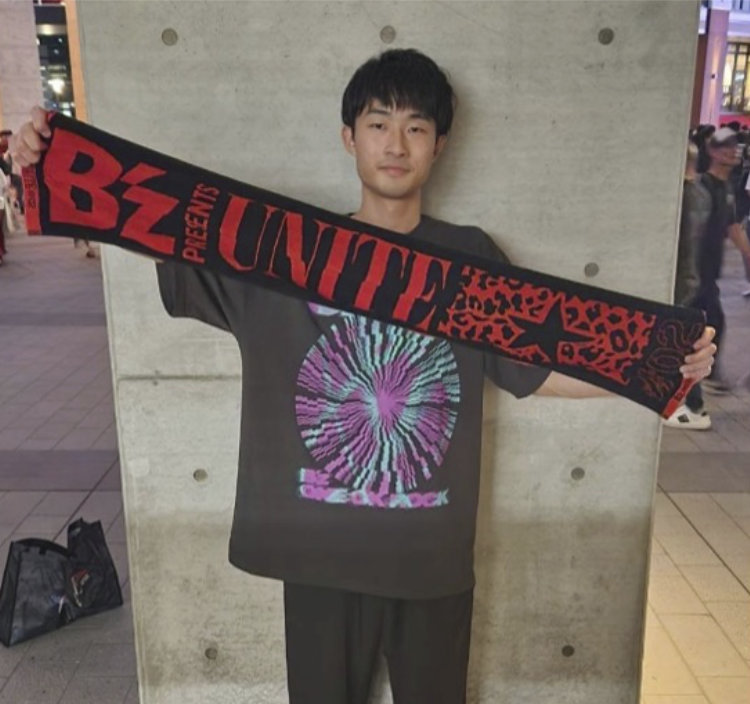
- Please tell us your future aspirations.
Murakami: One year from now, I want to be entrusted with projects from start to finish and contribute to sales. I will acquire the ability to take full responsibility and see things through on my own. In my private life, I would like to try playing golf. Also, I strive to be a generous and magnanimous person, and to be someone others can rely on.
Hirano: I also want to be able to take charge of projects alone as a project manager. And like my mother, who is a role model for me, I want to become a person who can find joy even when facing hardships and unpleasant situations. By this time next year, I want to be able to confidently say that I have definitely grown compared to when I first joined the company!
Wakamura: I want to not only follow my boss but also be proactive in making my own proposals. At the same time, I want to develop the ability to streamline tasks and make effective use of my time. I want to think about the priorities of my work and eliminate unnecessary clerical tasks.
Voices of the Recruitment Staff
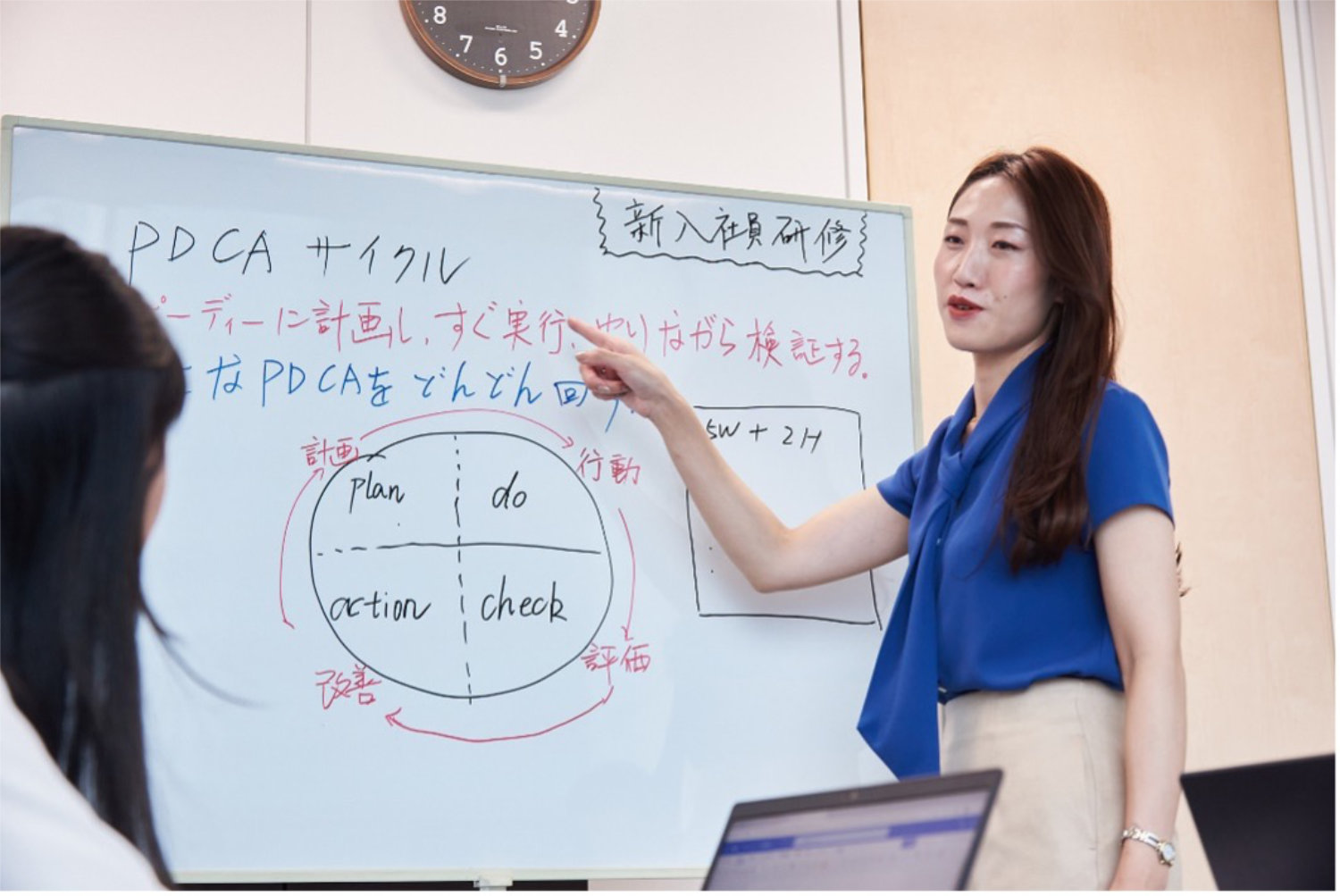
- Lastly, we would like to share a message from Yao, human resources staff at UJP!
Half a year since joining, I can feel the growth of the fresh new members of NAKAMA. In particular, I sense a sense of responsibility as a working professional and a strong desire for self-improvement in their ability to think and act from others' perspectives. To continue growing further, I would like them to keep three perspectives in mind.
- To view things from a long-term perspective
- To view things from an essential, fundamental perspective
- To view things with an objective perspective
In your first year as a working adult, please focus on doing your best with the "points" (the tasks in front of you). In your second year, I hope you will be aware of the "lines" (workflow) and sharpen your skills while supporting and being supported by those around you. By the third year, I want you to develop into a respectable professional trusted by both internal and external personnel by expanding the "surface" with a professional attitude while making use of your individuality.
I believe you can do it!
In conclusion~
In the short period of half a year, from each word, a sense of "small growth," "expectation for the future," and "gratitude towards NAKAMA" could be felt. Each and every step moving forward will contribute to the strength of the company and the entire group. We look forward to seeing what next year and beyond will bring.
Thank you, Hirano-san, Wakamura-san, Murakami-san, and Yao-san.